Free shipping sitewide!* View Details
Free shipping sitewide!* View Details

Amber vs. White LED Lights: Which Is Better for Snow, Fog, and Winter Driving?
November 3, 2026
0
LED lights
LED Ditch Light Kit
LED Light Mount
LED lightbars
LED light bar
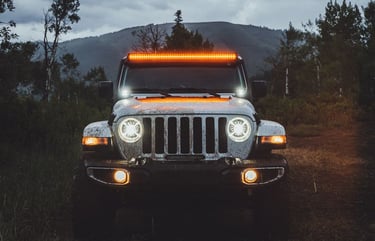
Amber Lights
White Lights
What's the Difference Between Amber and White LED Lights?
The main difference between amber and white LED lights is their color and how drivers perceive the illuminated road or trail.
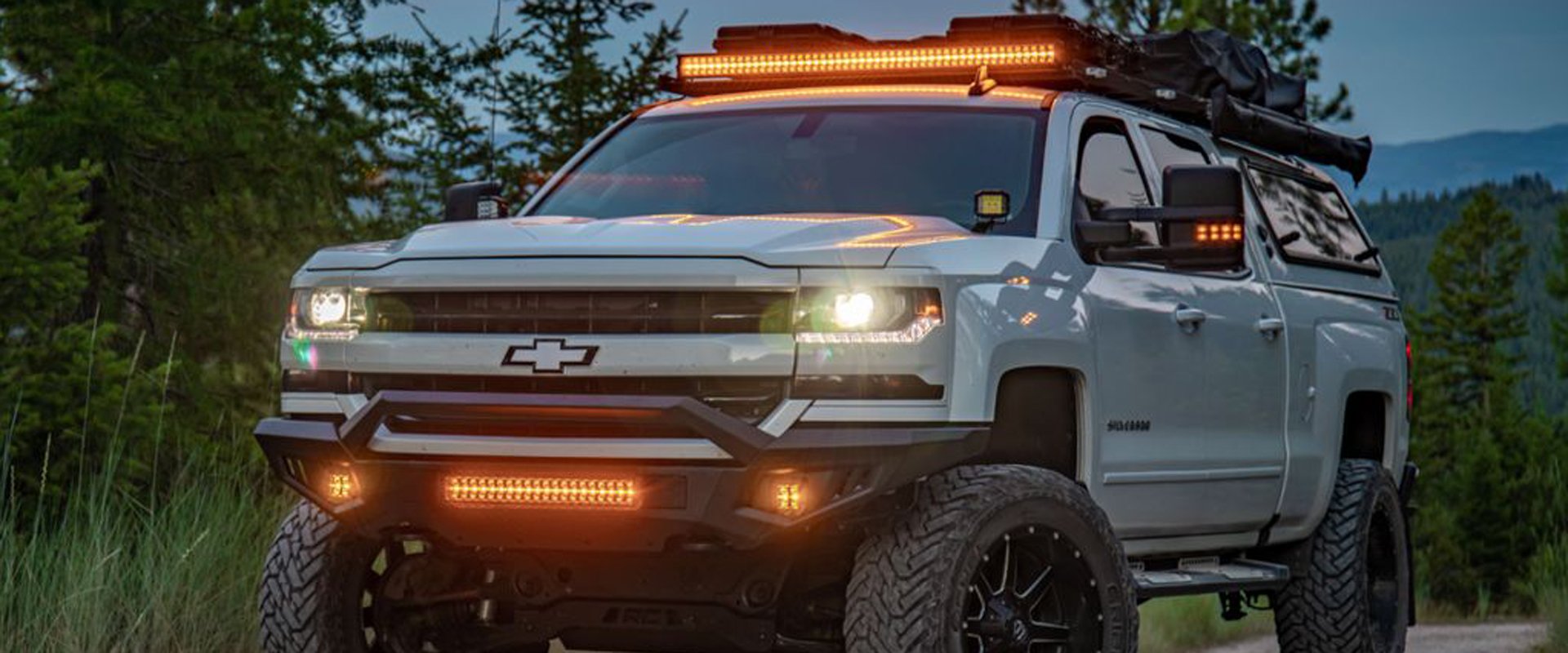
Amber LEDs produce a warm yellow-orange light. Many drivers prefer this color in poor weather because reflections from falling snow, fog, and dust often appear less harsh.
White LEDs produce a more neutral or cool-white light. They're popular for general driving, trail lighting, and off-road applications where illuminating a larger area or seeing obstacles farther ahead is the priority.
One specification worth understanding is color temperature, measured in Kelvin (K).
Lower Kelvin values produce warmer-looking light, while higher values produce cooler-looking light. For example, Rough Country offers yellow fog lights rated at 3200K, while some white LED options produce light around 6000K.
Color temperature doesn't tell you how bright a light is. Brightness is often described using lumens, while beam pattern determines where that light goes.
Here's how amber and white LEDs generally compare:
|
Driving Condition |
Amber LED |
White LED |
|
Heavy snow |
Often less distracting glare |
Falling snow may create bright reflections |
|
Fog |
Warmer appearance often preferred |
Effective with a controlled fog beam |
|
Rain |
May feel more comfortable on wet roads |
Effective with proper aiming |
|
Dusty trails |
Popular for reducing perceived glare |
Dust reflections may become distracting |
|
Clear nighttime driving |
Useful for general illumination |
Strong choice for distance and coverage |
|
Off-road use |
Good for dusty or poor-visibility conditions |
Good for spotting obstacles and terrain |
Keep in mind, light color is only part of the equation. A properly aimed white fog light often provides better visibility than an amber spotlight aimed directly into falling snow.
Get the Latest from Rough Country
Sign up for our newsletter to receive product updates, exclusive deals, and off-road tips straight to your inbox.
Why Does Light Create Glare in Snow, Fog, and Dust?
When light hits snowflakes, fog droplets, or airborne dust, some of that light scatters back toward the driver. This is called backscatter.
You've likely experienced the effect while driving through heavy snow with your high beams on. Instead of seeing farther down the road, you're suddenly looking at a bright wall of falling snow.
Amber lighting often feels easier on the eyes because it contains less blue light than cool-white lighting. But the idea that amber light always cuts through fog or snow better isn't quite accurate.
Fog droplets and snowflakes scatter a broad range of visible wavelengths. Beam direction, light intensity, particle size, and the amount of precipitation all affect how much glare reaches your eyes.
That's why a controlled beam aimed toward the road often makes a bigger improvement than changing light color alone.
Are Amber Lights Better Than White Lights in Snow?
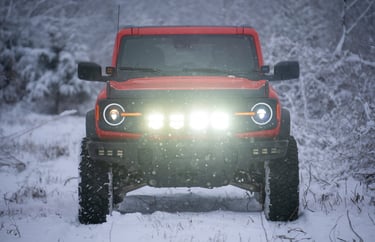
Amber LED lights are often preferred for driving through falling snow because their warmer light tends to create less distracting reflections for some drivers.
Snow creates two different visibility challenges: falling snow and snow already covering the road.
Driving Through Falling Snow
Heavy snowfall scatters light back toward your windshield. Bright auxiliary lights, particularly high-mounted light bars, sometimes make the effect worse.
Amber fog lights with a low, controlled beam are worth considering for these conditions.
For better visibility in falling snow:
- Use low beams rather than high beams.
- Avoid unnecessary high-mounted auxiliary lighting.
- Keep headlights, fog lights, and LED pods free of snow and ice.
- Reduce your speed when visibility drops.
Driving on Snow-Covered Roads
Once the snowfall stops, white LEDs remain useful for illuminating the road and surrounding terrain.
Amber lighting may provide a more comfortable appearance against snow-covered surfaces, but the amount of contrast depends on the lighting, road conditions, and surrounding environment.
For clear winter nights, a properly aimed white lighting setup often works well without additional amber lights.
Are Amber LED Lights Better for Fog?
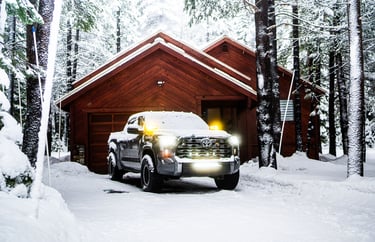
Amber and selective-yellow LED fog lights are popular for foggy driving because many drivers find their warmer output more comfortable than cool-white lighting.
Fog consists of tiny water droplets suspended in the air. When bright light shines into those droplets, some reflects and scatters back toward the driver.
The best way to control this glare is with a fog-specific beam pattern.
Unlike spotlights or general-purpose floodlights, fog lights are designed to spread light low and wide across the roadway while limiting upward illumination.
This helps illuminate road edges, lane markings, and nearby hazards without projecting unnecessary light into the fog.
Rough Country's 2-inch Black Series SAE Yellow Fog Lights, for example, feature a 3200K color temperature and a fog-specific beam designed for poor-weather visibility.
For frequent foggy commutes, properly aimed yellow or amber fog lights are a practical choice. White fog lights with an appropriate beam pattern are also effective.
Are Amber or White Lights Better in Rain?
Both amber and white LED lights work in rain. The biggest differences come from glare, beam control, and reflections from wet pavement.
Heavy rain reduces contrast and makes road markings harder to distinguish. Wet asphalt, standing water, and reflective surfaces also create additional glare.
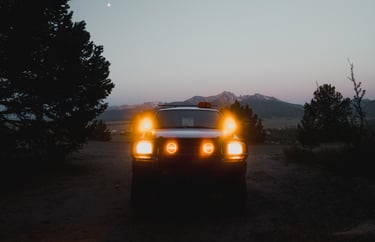
Amber lights sometimes provide a more comfortable appearance in these conditions, especially when bright white reflections become distracting.
White LEDs still work well for ordinary rainy-night driving when properly aimed.
If most of your driving involves paved roads and occasional rain, replacing your white headlights with amber lighting isn't necessary.
A better approach is to maintain your existing headlights and consider appropriately designed fog lights for additional close-range illumination.
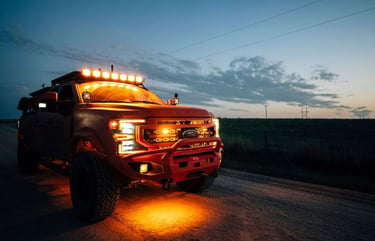
Are Amber Lights Better for Dusty Trails?
Amber LED lights are a popular choice for dusty trails because their warmer output often makes airborne dust less visually distracting.
If you've followed another truck or UTV down a dry dirt road, you've seen how quickly dust clouds reflect light back toward your windshield.
Bright white spotlights aimed directly into the dust may make the cloud appear even thicker.
Amber pods with a controlled beam pattern are useful for low-speed trail driving when dust hangs in the air.
Once conditions clear, white spot or driving beams are useful for seeing obstacles farther ahead.
There's also a difference between front-facing amber lights and rear-facing dust or chase lights.
Front-facing amber pods illuminate the trail ahead. Rear-facing amber chase lights help following drivers spot a vehicle in dusty conditions. These serve different purposes and should be selected and operated according to applicable trail rules.
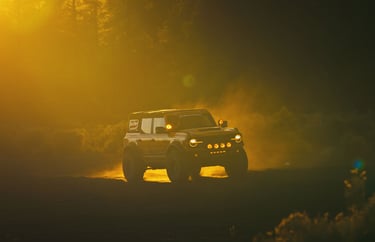
Does Beam Pattern Matter More Than Light Color?
Yes. Beam pattern, mounting height, and proper aiming often have a greater impact on usable visibility than choosing amber or white LEDs.
The beam pattern determines where the light goes, how far it reaches, and how much reaches the surrounding area.
Spot Beam
A spot beam concentrates light into a narrower pattern to illuminate objects farther ahead.
Spot beams work well for clear nighttime trail driving, open terrain, and situations where distance matters.
They're less suitable for heavy fog or falling snow when intense forward light creates distracting reflections.
Flood Beam
A flood beam spreads light across a wider area, helping illuminate nearby terrain, trail edges, and obstacles.
Flood beams are useful for rock crawling, low-speed off-roading, and work areas where seeing the surrounding ground matters more than maximum distance.
Fog Beam
A fog beam directs light low and wide with a controlled upper cutoff.
This design limits excessive upward light, helping reduce glare in poor weather.
A regular flood or spot pod isn't automatically a fog light, even if it produces amber light.
When choosing lights for winter conditions, start with the beam pattern. Then decide which light color fits your driving needs.
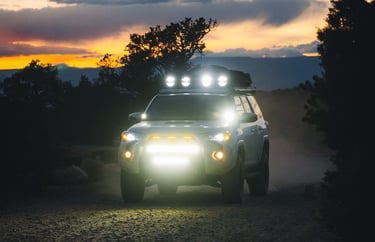
Where Should You Mount Amber and White LED Lights?
Mounting location affects both visibility and glare. A bright light in the wrong position may create more problems than it solves.
Fog Lights
Fog lights typically mount low on the front bumper or in factory fog light locations.
When properly designed and aimed, they illuminate the roadway immediately ahead without sending excessive light upward.
These are a good starting point for drivers who frequently encounter fog, rain, or snow.
Ditch Lights
Ditch lights usually mount near the hood, cowl, or windshield pillars.
They're designed to illuminate the sides of a trail, helping drivers spot turns, obstacles, and terrain outside the main headlight beam.
Rough Country offers vehicle-specific ditch light kits for several truck and Jeep applications.
Because these lights mount higher, they aren't ideal substitutes for low-mounted fog lights in heavy snow or fog.
LED Light Bars
LED light bars provide additional illumination across a wide area or farther down the trail, depending on their beam design.
They're useful for nighttime off-roading, work areas, and open terrain.
Roof-mounted light bars are less practical during heavy precipitation because light reflecting from snow, fog, or even the hood may create glare.
Bumper-Mounted LED Pods
LED pods offer flexible mounting options and multiple beam styles.
Depending on the setup, they provide spot, flood, or fog-specific illumination.
For winter driving, lower-mounted pods with a controlled beam often make more sense than adding bright lights near the windshield.
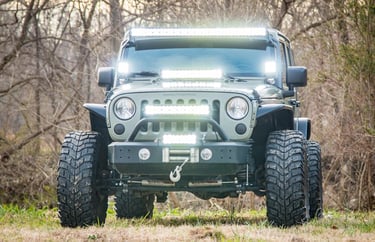
Should You Use Amber and White LED Lights Together?
For many truck, Jeep, and UTV owners, combining amber and white LED lights offers the most flexibility.
Rather than choosing one color for every condition, you give each light a specific purpose.
A truck used for daily commuting and weekend trail riding, for example, might use:
- White headlights for regular nighttime driving.
- Amber or yellow fog lights for snow, fog, and rain.
- White ditch lights for spotting obstacles near trail edges.
- White LED light bars for additional visibility on clear off-road trails.
Dual-function LED pods are another option for drivers who want both colors in one housing.
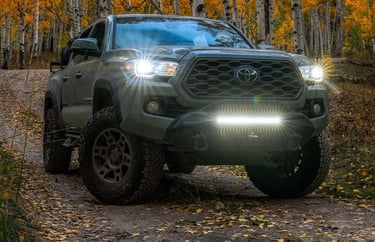
Rough Country's 6-inch Angled LED Light Pods feature independent white and amber LED rows. They produce 2,304 lumens of white output and 1,684 lumens of amber output, allowing drivers to select between the two for different off-road conditions.
One detail worth checking before purchasing is whether the amber LEDs provide the main light output or serve only as daytime running lights (DRLs).
Some LED lights feature amber DRLs paired with white primary illumination. Those products don't necessarily provide a full amber driving beam.
Which LED Lighting Setup Is Best for Your Driving Style?
The right setup depends on how and where you drive. Here are three common situations.
For the Daily Winter Commuter
If your truck or SUV spends most of its time on highways, back roads, or city streets, start with properly aimed headlights and road-approved fog lights.
Amber or yellow fog lights are worth considering if you regularly deal with fog, snow, and heavy rain.
Rough Country's 2-inch Black Series SAE Yellow Fog Lights produce 2,400 lumens of 3200K light and meet SAE J583 fog-light requirements.
For most daily drivers, a combination of factory headlights and properly installed fog lights covers a wide range of winter conditions.
For the Weekend Trail Driver
If you regularly take your truck, Jeep, or UTV off-road, a combination of amber and white lighting makes sense.
White spotlights or light bars help illuminate open trails and obstacles in clear conditions.
Amber pods provide another option when snow, dust, or fog creates distracting glare.
Dual-function LED pods offer flexibility without requiring separate housings for every lighting color.
For the Work Truck Owner
Work trucks often need lighting for early mornings, late evenings, job sites, and changing weather.
A practical setup might include road-approved fog lights for driving in poor weather and white auxiliary lighting for off-road work areas.
When choosing work lights, pay attention to beam width, mounting locations, weather resistance, and how much surrounding area you need illuminated.
Amber vs. White LEDs: Which Should You Choose?
The best LED color depends on the conditions you face most often.
If you frequently drive through snow, fog, rain, or dust, amber or yellow lighting is worth considering for its warmer appearance and potential glare-comfort benefits.
If most of your driving happens on clear roads or trails after dark, white LEDs are an effective option for general illumination and longer-range lighting with the appropriate beam.
For drivers who experience both, combining amber fog lights with white auxiliary off-road lighting offers a practical balance.
Rough Country offers fog lights, LED pods, light bars, ditch light kits, and mounting accessories for a variety of trucks, Jeeps, SUVs, and UTVs. Fitment and installation requirements vary by vehicle and product.
Whatever setup you choose, focus on more than color. The right beam pattern, mounting position, and proper aiming make the biggest difference in putting usable light where you need it.
FAQs
Are amber or white LED lights better for snow and fog?
Amber lights are often preferred in snow and fog because many drivers find their warmer light less glaring. However, beam pattern and aiming play a larger role in controlling reflected light. Properly designed fog lights, whether yellow or white, are more useful than overly bright, poorly aimed auxiliary lights.
Do amber lights cut through fog better than white lights?
Amber lighting doesn't automatically penetrate fog better than white light. Fog droplets scatter multiple wavelengths of visible light. Amber lights may feel less harsh, but a low, wide fog beam with controlled upward output makes a bigger difference in reducing glare.
Should fog lights be amber or white?
Both are effective when designed with a proper fog beam. Amber or selective-yellow fog lights are popular among drivers who frequently encounter snow, rain, and fog. White fog lights are also a practical option for everyday driving.
What is the difference between amber LED lights and yellow fog lights?
Amber and yellow describe related but distinct light colors, although manufacturers sometimes use the terms interchangeably. Yellow fog lights often use a warmer color temperature around 3000K to 3200K, while amber lighting may appear more orange. Check the actual product color and whether the amber output is a primary beam or a DRL.
Is it better to install amber and white LED lights together?
Combining amber and white lighting offers flexibility for drivers who encounter different conditions. Amber fog lights are a popular choice for poor weather, while white auxiliary lights provide general off-road illumination. Dual-function LED pods also offer both colors in one housing, depending on the product.